 I can sometimes be accused of thinking too much.
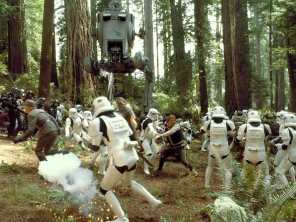
Growing up as a kid, as I watched the original Star Wars trilogy, I’d enjoy the explosions, the light saber duos and, if I’m being honest, Princess Leia in the gold bikini. Countless people died in the movie, including so many Stormtroopers, many of whom had some of the worst aim in movie history. I can only imagine what the Stormtrooper toilet looked like.
It wasn’t until later in life that I started wondering if these Stormtroopers had family members. Who was getting word that their loved one was killed? Who was weeping? Who was thinking about how they were going to tell the kids?
Again, I can be accused of thinking WAY too much.
But it does acknowledge the fact that, in war and conflict, we have a habit of seeing “our side” as a group of brave individuals fighting for us, while the “other side” is just an ideal we disagree with made up of anonymous soulless evil doers. No one in particular, really.
But that’s never the case, is it?
Someone’s 20, 30, 40 years of memories have come to an end with the flash of a gun or, more likely, the explosion of a missile shot from miles away. Someone is being told their spouse died. Someone is planning a funeral for their kid. A child is comprehending what “not coming home” means.
Even outside of war, we live in a world where, sometimes, the “other side” can become soulless and anonymous to us. We like to put things in labeled blobs. Those Republicans, those liberals, those illegal immigrants, those pro-lifers.
Social media has made this easier to do. We look at disagreeable posts not as words from a friend, family member or a stranger but rather we see them as weeds to be addressed with judgement and disrespect.
My fellow liberal leaning folks are not immune to this. If anything, we can sometimes be worse. We lash out with judgement at those we see as not being as intellectual or “woke” as we are.
Memorial Day was created following the Civil War to honor those who lost their lives in battle. Both sides (at least in death) were given the same level of respect. It was a chance to remember each side as a group of individuals, not as a generalization of ideas.
What if we did that when people were alive? What if we considered them as individuals and less so as anonymous examples of disagreeable viewpoints. Would we treat each other better? Would we, as I recently read, be the kind of Americans worth fighting for?
 middleagedhipster.com